
Patient Stories
“It’s Just Amazing To Think What You Can Do”: Four-Year-Old Dylan Benefits From Charity-Funded iMRI Technology
7 Oct, 2026
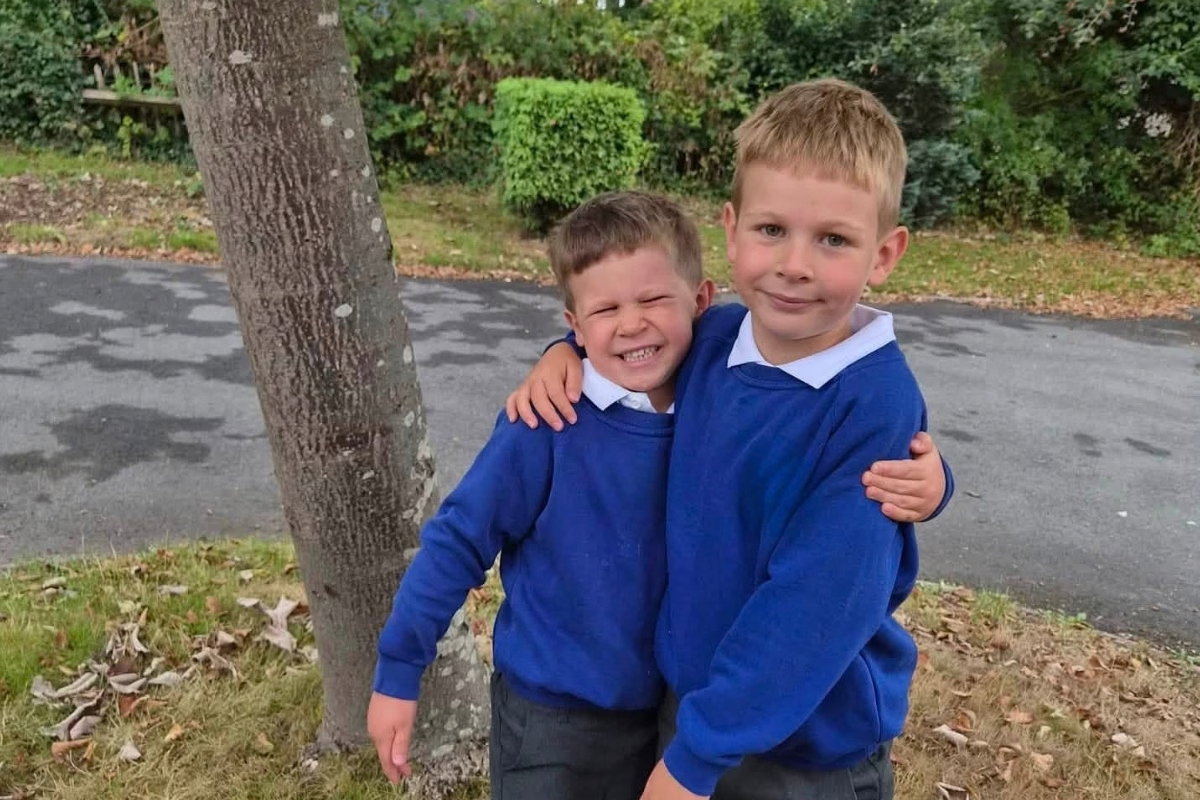
Funded by our iMRI Appeal, our hospital’s new intraoperative MRI is transforming brain surgery for patients like Dylan, aged four.
Dylan was a happy and healthy 18-month-old when he started tilting his head and frequently losing his balance, falling over and struggling to sit up. His worried mum, Sara, took him to his local A&E over the weekend, initially suspecting an ear infection. But Sara felt something wasn’t adding up, and after more tests, a CT scan revealed a far more serious condition: Dylan had a bleed on his brain.
Sara’s world fell apart. Her precious little boy was rushed to our hospital under blue lights in the early hours of the morning, where doctors stabilised the bleed and diagnosed Dylan with a large cavernoma, a cluster of abnormal blood vessels that can develop in the brain or spinal cord, and looks like a raspberry. While they often don’t cause any symptoms, a cavernoma can bleed into the surrounding areas of the brain.
Because the cavernoma was so deep inside Dylan’s brain, he needed surgery to treat it. Clinicians explained to his worried family that because of his young age and the fact his symptoms were improving, they would need to wait until the little boy turned two before they could operate more safely.
However, a month before his planned operation, Dylan showed signs of a second bleed. His horrified parents rushed the toddler to our hospital, where doctors performed emergency surgery.
Sara could only wait with her heart in her mouth while her son went under general anaesthetic and received brain surgery to remove the cavernoma. Thankfully, Dylan seemed to recover well, and he remained under the hospital’s care, receiving annual MRI check ups to monitor his progress.
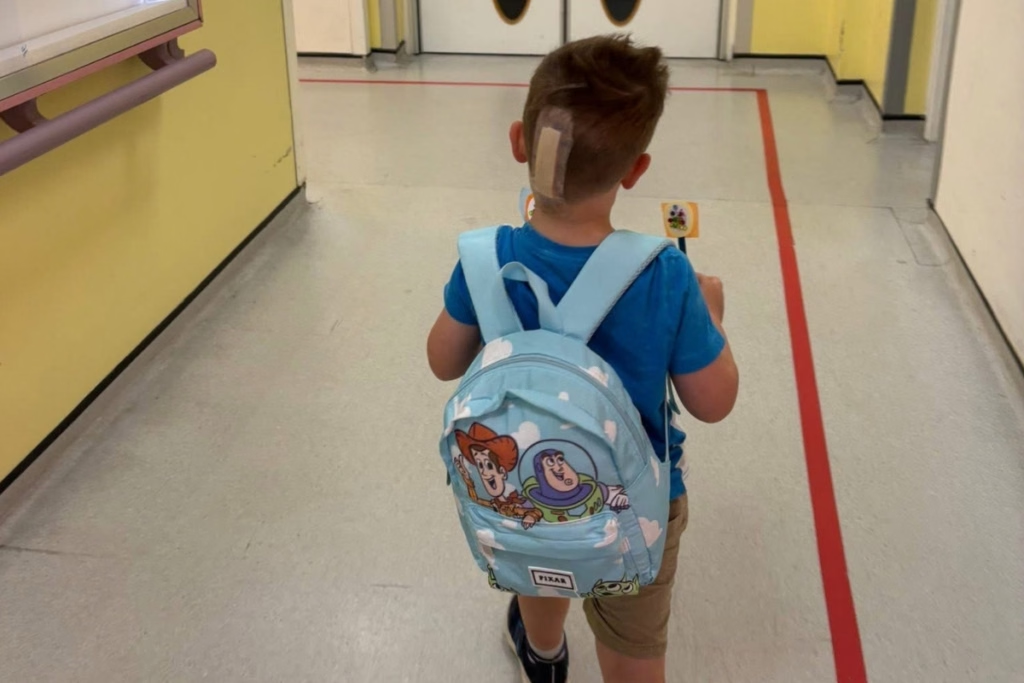
Dylan attending one of his yearly MRI scan appointments at our hospital
But as Dylan grew, Sara knew something wasn’t right. The little boy struggled with frequent headaches, even waking up in the night because of the pain.
Concerned, Sara took Dylan to our Emergency Department. She was worried she might be overreacting, but she was right to trust her instincts. Dylan’s MRI check-up revealed that a small part of the cavernoma was still in his brain.
Doctors recommended further surgery, and faced with the possibility of more brain bleeds, the family decided to go ahead. Sara reflects: “It was so awful, not knowing what was going to happen to Dylan. I remember worrying, what if he has a stroke? But we knew he was in the right hands.”
Thanks to our iMRI Appeal, intraoperative MRI technology was available for Dylan’s second operation.
Previously, our neurosurgeons would have to rely on pre-operative images to plan an operation. However, during surgery, the brain, which is soft, changes shape. This means, very quickly, the pre-operative information becomes outdated, making it less reliable and harder for surgeons to ensure they’ve removed everything they need to.
Located next to a new purpose-built iMRI theatre, the iMRI allows our neurosurgeons to stop partway during surgery and re-scan the brain to get real-time imagery. This technology vastly reduces the risk of needing another operation, sparing patients and families from going through another lengthy surgical procedure.
While she was still very worried for her son, Sara felt much more reassured about the operation the second time around. Surgeons located further fresh bleeding, and partway through Dylan’s operation, the iMRI was able to identify another section of cavernoma tissue, which surgeons were successfully able to remove.
Sara said: “Having the iMRI in surgery made such a difference. They didn’t have to wait to do Dylan’s scan, and that gave us peace of mind straight away, which was a relief, especially after the first time. They couldn’t have done any more for us. It’s just amazing to think what you can do, and how many families you’ll be able to he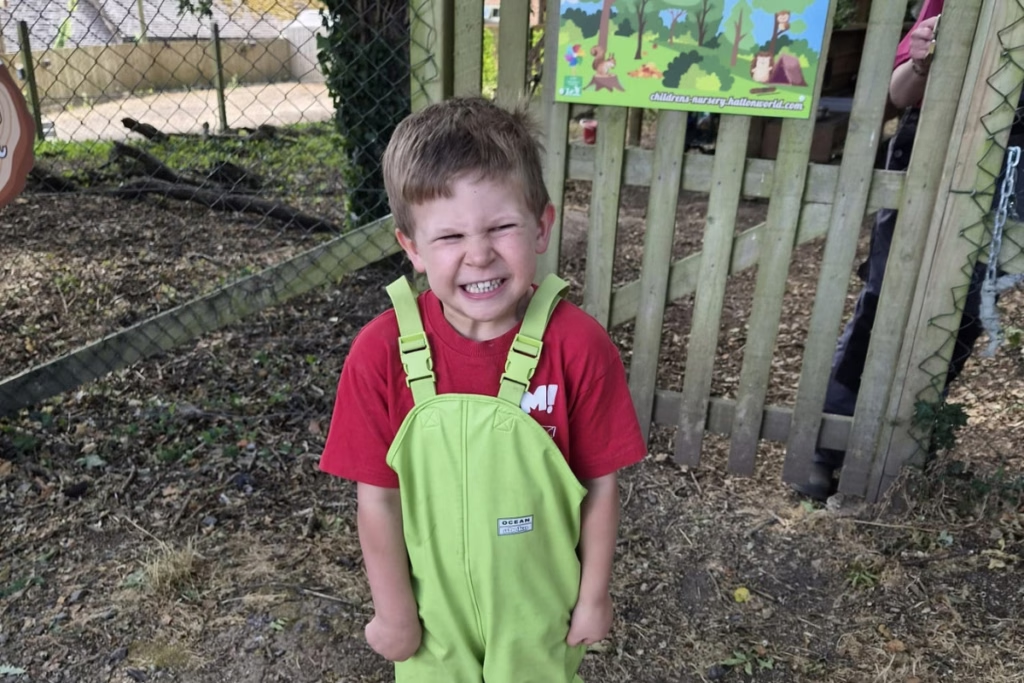 lp, thanks to this technology.”
Dylan spent five days in hospital recovering from his operation before returning home. He’s now back to his normal, bubbly, active self, learning how to ride a bike and starting his first year at school.
Sara said: “We were so afraid that Dylan’s personality might change after his surgery. But he’s still the same cheeky chap, so full of energy and so sociable.
“We’re so grateful to Birmingham Children’s Hospital for making this all possible; without them, Dylan wouldn’t be where he is today.”