
Patient Stories
Amelia and Ruby’s story
23 Jun, 2026
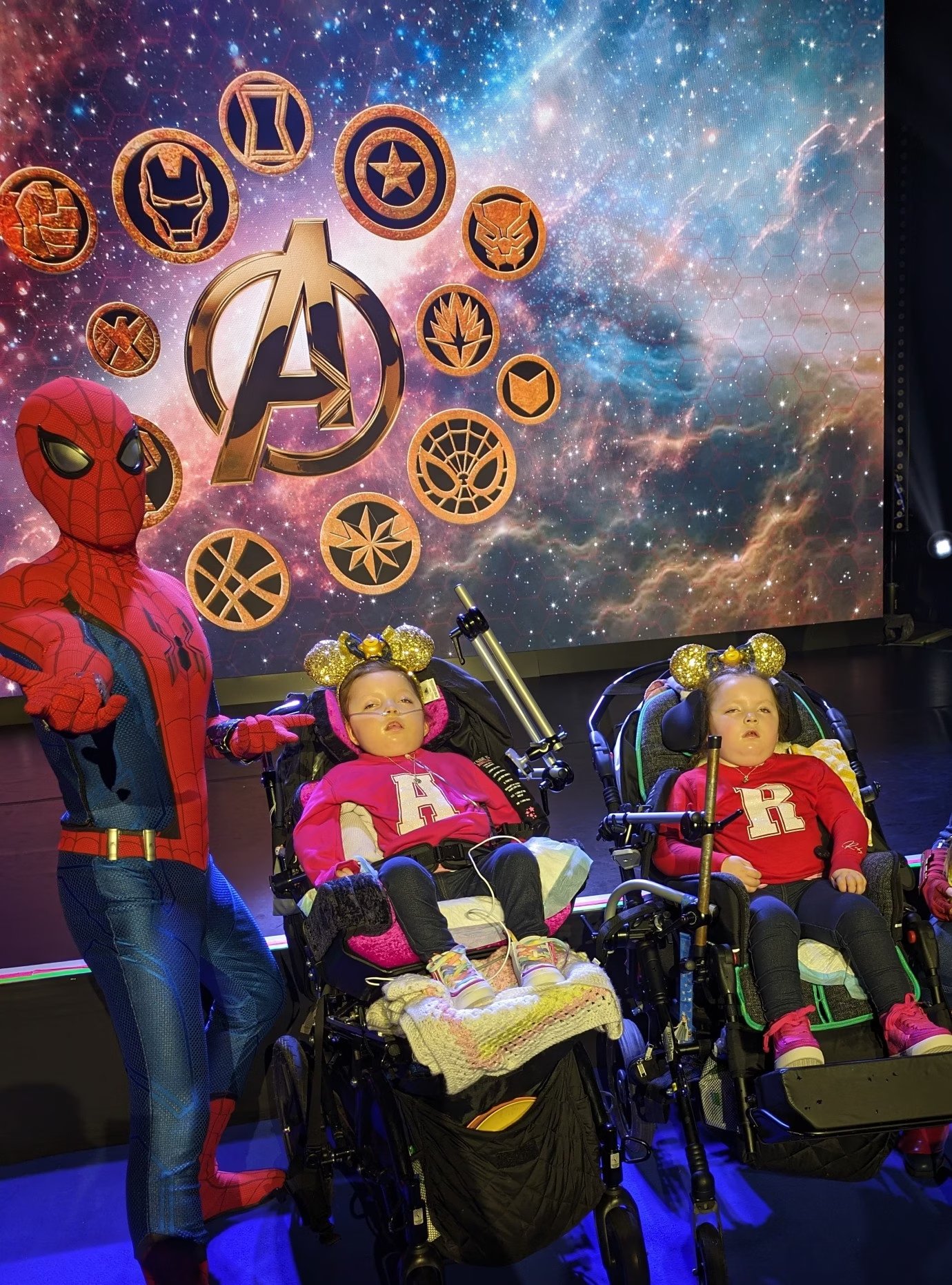
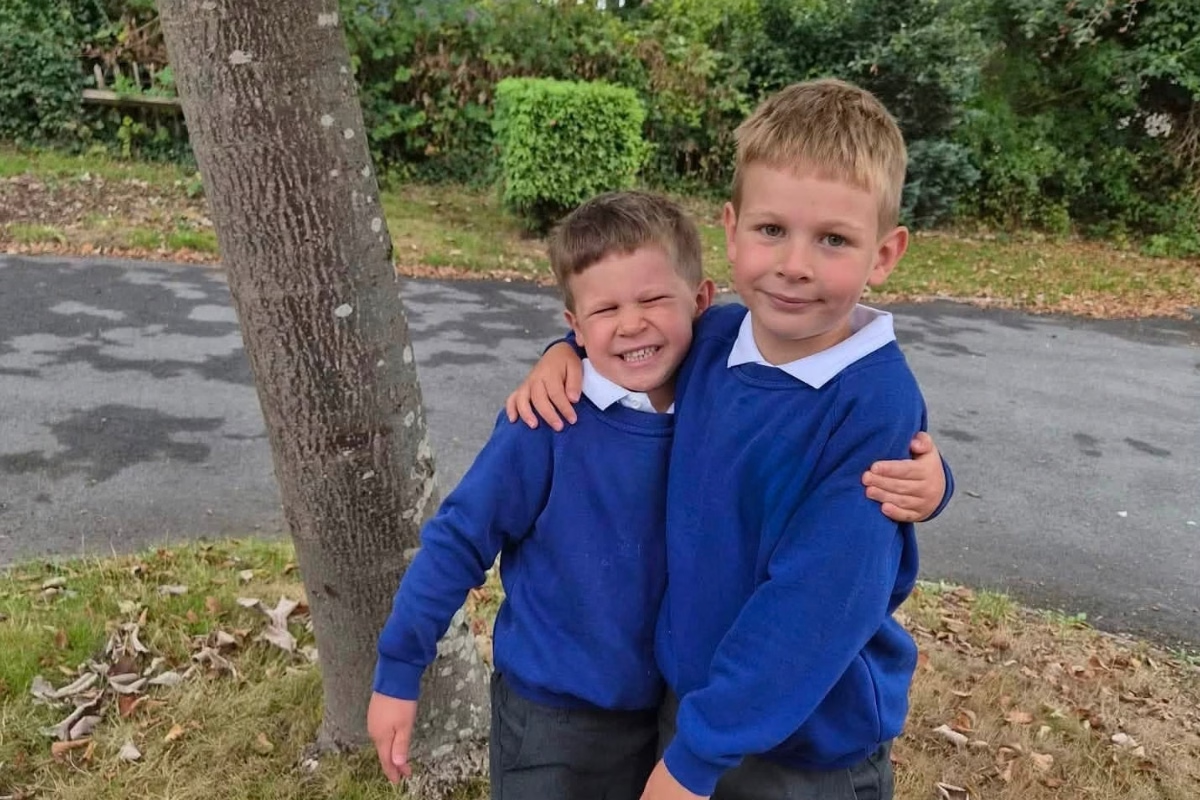
Katie and her husband Pete have been in and out of our Emergency Department for years with their twin daughters, Amelia and Ruby.
When the girls were just six months old, a health visitor assessed Amelia wasn’t hitting the developmental milestones she should be for her age and made a referral to the Children’s Hospital. At the appointment, the doctor confirmed the health visitor’s concerns, so they set about investigating further.
It was worrying news for Katie and Pete. Until this point, the girls seemed like happy and healthy twins.
Over the next few months, Amelia’s symptoms worsened, and she started having seizures, which resulted in her being admitted into hospital. She ended up staying in for three months after developing bronchitis. During that time, she was diagnosed with Rett Syndrome, followed by Ruby’s own diagnosis of the condition just three months later. The family was absolutely devastated.
Rett is a rare genetic neurological disorder, which affects the brain’s development and leads to regression in a child’s motor skills, speech and muscle tone and can cause seizures, breathing difficulties, gastrointestinal issues and many more symptoms.
It’s a life-limiting condition and a spectrum disorder, so while some people with Rett can live for years, in more severe cases, complications with breathing and seizures can lead to an early death for some patients. Sadly, this was the case for Amelia. Towards the end of her life, she was in and out of hospital every month, admitted via our Emergency Department.
On her last stay, her consultant spoke with her parents and told them it was unlikely she would survive much longer. Her poor body was exhausted. Katie and Pete were completely broken by the news but knew it was the right decision to take her home, where they could make special memories together with Ruby and their youngest daughter, Matilda. Amelia passed surrounded by her loved ones shortly after, aged just six.
Ruby, now seven, whose symptoms developed later than Amelia’s and are less severe, is still under the care of the Children’s Hospital.
The couple had to be trained on a number of procedures to look after the girls at home, from inserting and removing feeding tubes to completing bowel washouts. They also have equipment to monitor Ruby’s oxygen saturation levels, as if it falls too low, or Ruby is struggling to breathe, she needs to be transferred to the Emergency Department, often under blue lights.
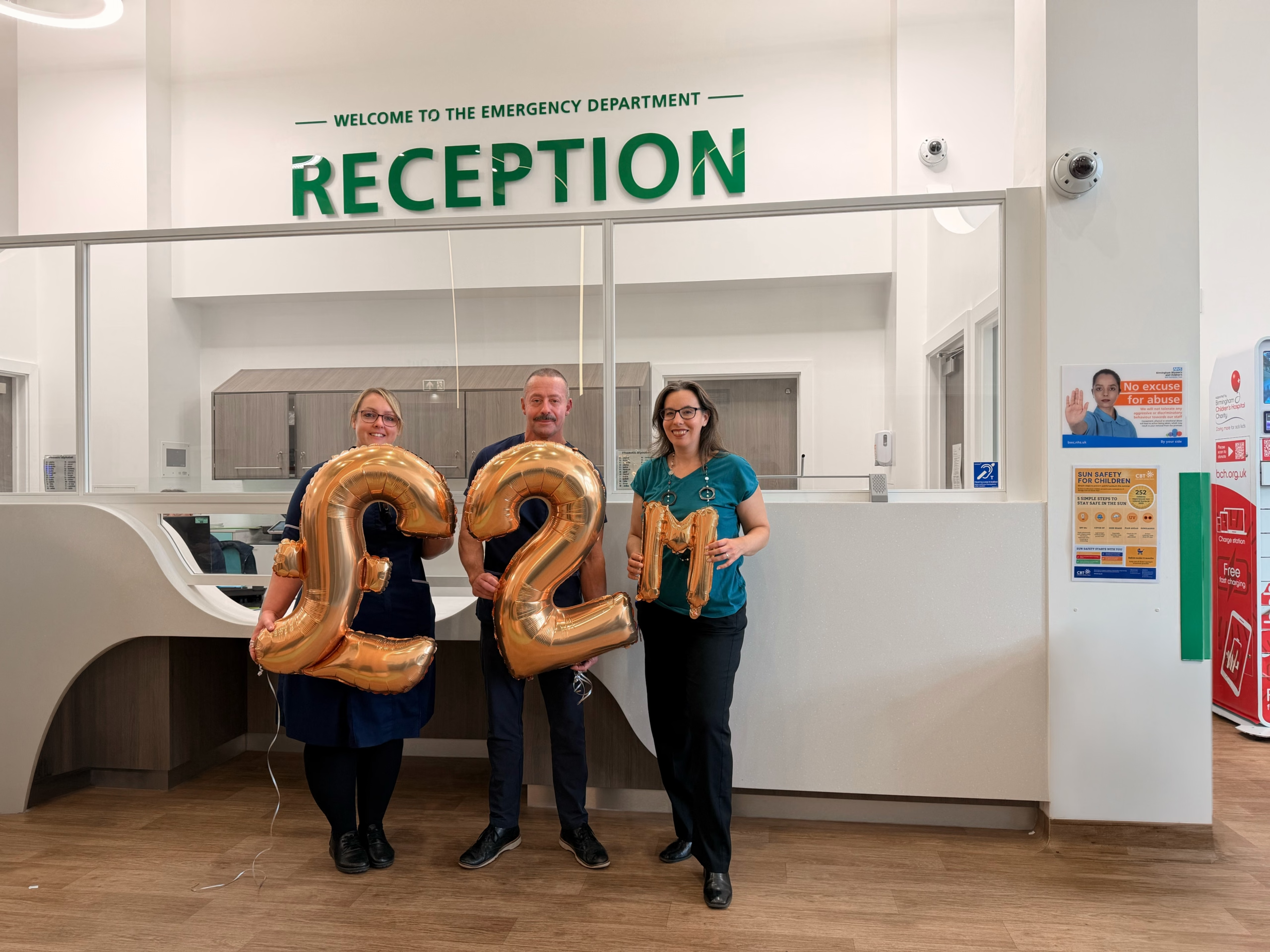
The nature of her condition means Ruby finds herself in hospital every few months, so the Emergency Department is a familiar setting for the family. Katie agrees it’s in desperate need of improvement. She says: “As Ruby is quite vulnerable to infection, we are often able to bypass the waiting room and get moved to the resuscitation area, which is three beds separated by curtains.
“Unfortunately, it doesn’t offer much privacy. We’ve had many occasions where we’ve been discussing our daughters’ care or having difficult conversations, and you’re acutely aware the family next to you is able to hear everything being said. It’s not very nice.
“On one of our more recent visits, we were next to a child who had been rushed in with a dog bite. Naturally, the child’s mum was beside herself, which was really distressing and triggering for us to hear. I just wanted to get out of there into a calmer environment for me and Ruby.”
Plans for the new resuscitation area include three larger bays with more space to move around. Crucially they will be separated by walls offering more privacy.
In addition to this, the waiting area will include a Changing Places accessible toilet, with a hoist and adult-sized changing bench. Katie continues: “The Changing Places toilet will be a gamechanger. Ruby has extremely limited movement and she’s now seven-years-old, so trying to change her in the hospital using normal facilities can be backbreaking work. Not only will it help me and her dad, it will also give Ruby more dignity, which is the most important thing.”
Katie comments: “I’m really pleased these changes are being made to the Emergency Department – the refurbishment is long overdue. As we’re here so often, we know more than most the massive difference these new features will make to our experience. We really hope people will support the appeal to improve things for patients like Ruby and families like ours.”
Help sick kids like Amelia and Ruby
With your support, we can transform our Emergency Department for seriously ill children.